

Which One Actually Fits You?
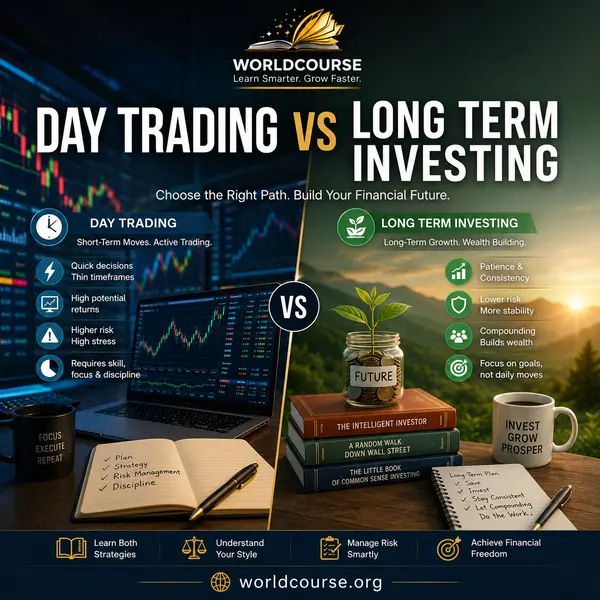
Day trading and long term investing often get discussed as if they’re just two flavors of the same activity, different speeds toward the same goal of growing your money. In reality, they require almost entirely different skill sets, time commitments, and even personalities to do well. The Day Trading vs Long Term Investing guide breaks down exactly how they differ, so you can choose the path that actually fits your life, not just the one that sounds more exciting.
This isn’t a guide pushing you toward one approach over the other. It’s an honest, structured comparison built to help you make a decision based on your actual circumstances, risk tolerance, and goals, rather than hype from either side.
Why This Comparison Matters
The Assumption That They’re Just Different Speeds
Many beginners assume day trading is simply a faster, more intense version of investing, same underlying skill, just compressed into shorter timeframes. This assumption leads people to try day trading using an investing mindset, or attempt long term investing with a day trader’s constant need to check positions, and both mismatches tend to produce frustrating results.
Why the Right Fit Depends on More Than Just Returns
Comparing day trading and investing purely on potential returns misses most of what actually determines success: available time, emotional temperament, capital requirements, and tolerance for short-term volatility all matter as much as, if not more than, the theoretical return potential of either approach.
What You’ll Learn Inside Day Trading vs Long Term Investing
This guide is structured around a direct, practical comparison across the dimensions that actually matter.
Time Commitment: How Much Time Does Day Trading Actually Take?
The Reality of Day Trading Hours
Day trading isn’t a part-time activity you can do in spare moments. This chapter covers the realistic time commitment required, including pre-market research, active monitoring during trading hours, and post-session review, and why underestimating this is a common reason day trading attempts fail.
The Time Reality of Long Term Investing
In contrast, long term investing requires far less ongoing time, but this section also covers the discipline required to avoid overmanaging a long-term portfolio, which is a different but equally real time-related challenge.
Risk Comparison: Is Day Trading Riskier Than Investing?
Volatility and Leverage in Day Trading
This chapter covers why day trading often carries higher risk, including the role of leverage, the psychological pressure of rapid decision-making, and how quickly losses can accumulate without proper risk management.
Risk in Long Term Investing
Long term investing isn’t risk-free either. This section covers the real risks involved, including market downturns, sequence of returns risk, and the psychological challenge of staying invested through extended volatility.
Skill Requirements and Learning Curve
What Day Trading Actually Requires to Do Well
Learn what skills day trading genuinely demands, including technical analysis, rapid decision-making under pressure, and strict risk discipline, and why the learning curve is often longer and more expensive than beginners expect.
What Long Term Investing Actually Requires
This section covers the different, often underestimated skill set long term investing requires: patience, resistance to market noise, and the discipline to stick with a strategy through periods where nothing exciting seems to be happening.
Capital Requirements: How Much Money Do You Actually Need?
This chapter compares realistic capital requirements for each approach, covering why day trading often requires more starting capital to be practically viable, while long term investing can meaningfully start with smaller, consistent contributions over time.
Which One Actually Fits You?
The final section walks through a practical framework of questions, covering your available time, risk tolerance, financial goals, and temperament, to help you honestly assess which approach, or combination of both, actually fits your situation.
Who Is This Ebook For?
Day Trading vs Long Term Investing is built for:
- Beginners trying to decide which approach to start with
- Long term investors curious about whether day trading might fit their situation
- Day traders questioning whether their current approach actually matches their available time and temperament
- Anyone who has struggled with one approach and wants to honestly evaluate whether the other might be a better fit
Why This Guide Is Different
Most content on this topic comes from people who’ve already picked a side and are defending it. Day Trading vs Long Term Investing is different because it presents both approaches honestly, including the real downsides of each, rather than selling you on one particular path.
Choose the Path That Actually Fits Your Life
Day trading and long term investing aren’t just different strategies, they require different lifestyles entirely. With Day Trading vs Long Term Investing, you get an honest, practical comparison to help you choose the path that actually fits your time, risk tolerance, and goals. Download it today and stop guessing which approach is right for you.
Frequently Asked Questions (FAQ)
Q1: Which is better, day trading or long term investing?
Neither is universally better, it depends on your available time, risk tolerance, and temperament. The guide walks through a practical framework to help you determine which approach actually fits your specific situation.
Q2: Is day trading riskier than long term investing?
Generally yes, due to leverage, rapid decision-making, and shorter timeframes that leave less room to recover from mistakes. However, long term investing carries its own risks, including market downturns and the psychological challenge of staying invested through volatility.
Q3: How much time does day trading actually take compared to investing?
Day trading typically requires active monitoring during market hours plus pre and post-session work, making it closer to a full-time commitment. Long term investing requires far less ongoing time, though it still requires periodic review and discipline.
Q4: How much money do you need to start day trading versus investing?
Day trading often requires more starting capital to be practically viable given position sizing and risk management needs, while long term investing can meaningfully start with smaller, consistent contributions over time.
Q5: Can someone do both day trading and long term investing at the same time?
Yes, some people allocate a portion of their capital to long term investing while separately day trading with a smaller, clearly defined amount, though the guide covers why this requires careful capital and risk separation.
Q6: How do I access the ebook after purchasing it?
After purchase, you’ll get instant digital access to download the ebook, readable on any device including your phone, tablet, or computer.
Explore More on WorldCourse
- New to trading platforms? Start with Your First Trade: Platform Walkthrough
- Planning your first 90 days? See Your First 90 Days Trader Roadmap
- Build a real risk system with the Modern Traders Risk Playbook
- Understand real diversification with the Diversification Portfolio Guide
- New to trading vocabulary? Check the Trading and Investing Glossary
- Related read: What Is Coast FIRE? How to Know If You’ve Reached It
- Browse more ebooks and guides on WorldCourse
- Have questions about this ebook? Contact our support team


Reviews
There are no reviews yet.