
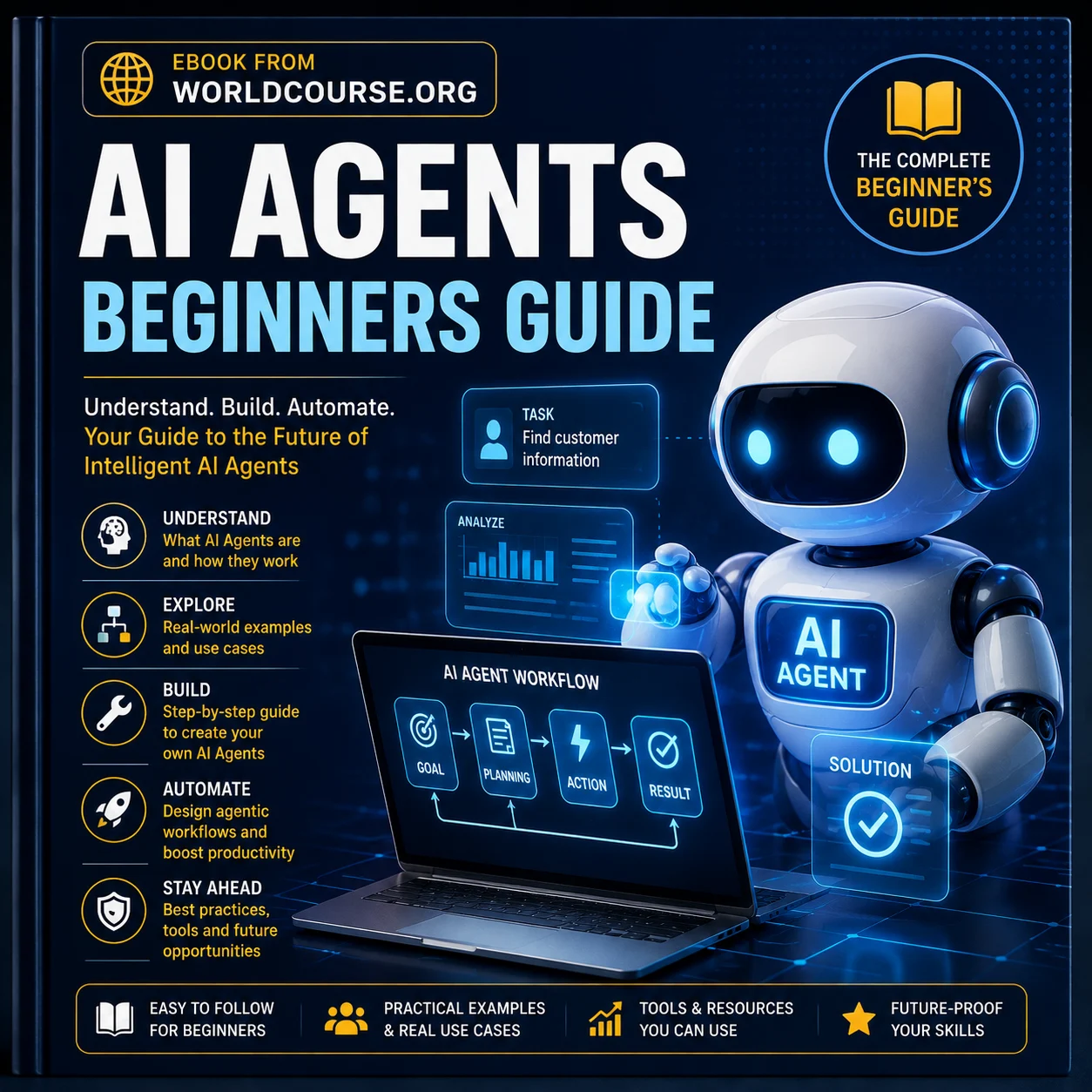


“AI agent” gets used constantly right now, in headlines, product launches, LinkedIn posts, often without anyone actually explaining what it means in practice. The AI Agents Beginners Guide exists to fix that, walking through real ai agents examples so the concept clicks, instead of staying an abstract buzzword you nod along to, and this guide keeps coming back to concrete ai agents examples throughout, not just in one chapter.
This isn’t a technical deep-dive written for machine learning engineers. It’s a plain-English guide built for beginners who keep hearing about agentic AI and want to actually understand it, use it, and maybe even build something with it themselves.
What Is Agentic AI, in Plain Terms?
Agentic Meaning: Why This Word Is Suddenly Everywhere
The agentic meaning behind all this terminology comes down to one core idea: an AI system that can take actions toward a goal on its own, rather than just responding to a single prompt and stopping. This chapter breaks down what actually makes something “agentic” versus just being a slightly fancier chatbot, using ai agents examples throughout to keep things concrete rather than abstract.
AI Agents Examples You’ve Probably Already Encountered
This section walks through real, concrete ai agents examples, a research assistant that searches, reads, and summarizes without step-by-step instructions, a coding agent that writes, tests, and fixes its own code, a customer support agent that resolves tickets end to end, making the abstract concept tangible through actual ai agents examples rather than definitions alone.
Agentic Workflows and How They Actually Work
Understanding Agentic Workflows
An agentic workflow is the sequence an AI agent follows to complete a task: planning steps, taking actions, checking results, and adjusting if something doesn’t work, often looping through this cycle multiple times without human input at every step. This chapter covers how an agentic workflow differs from a simple, single-response AI interaction.
Multi Agent Systems: When One Agent Isn’t Enough
Some tasks are complex enough that a single agent handling everything becomes inefficient. Multi agent systems split work across multiple specialized agents, each handling a specific part of a larger task and communicating results between each other. This section covers how a multiagent setup coordinates work, and when it’s actually worth the added complexity.
Agentic AI vs Generative AI: What’s the Real Difference?
This is one of the most common points of confusion, and this chapter addresses agentic AI vs generative AI directly. Generative AI produces content, text, images, code, in response to a prompt. Agentic AI goes further, using that generative capability as one tool among several to actually pursue a goal, make decisions, and take multi-step action. Every agentic system uses generative AI underneath, but not every generative AI use case is agentic.
Real Agentic AI Use Cases Worth Understanding
This chapter covers practical agentic AI use cases across different areas: research and analysis agents that gather and synthesize information, automation agents that handle repetitive multi-step business processes, and personal productivity agents that manage schedules and tasks with genuine autonomy rather than simple reminders. These agentic AI use cases are essentially expanded ai agents examples applied to specific, real situations.
Agentic AI Frameworks and Building Blocks
Common Agentic AI Frameworks for Beginners
If you’re curious about actually building something, this section introduces the agentic AI frameworks beginners typically start with, explaining what each generally handles, planning, memory, tool use, without requiring you to already be a developer to understand the concepts.
Choosing an AI Agent Builder
An ai agent builder, sometimes just called an agent builder, provides tools and templates for creating agents without writing everything from scratch. This chapter covers what to look for in an agent builder if you want to start experimenting without a steep technical learning curve.
How to Make an AI Agent: A Beginner’s Starting Point
This chapter answers how to make an ai agent step by step at a beginner level, covering defining a clear goal, choosing the right tools and data access, and testing the agent’s behavior before trusting it with anything important, without assuming prior coding experience.
Agentic Automation and Design Patterns
Agentic Automation in Everyday Work
Agentic automation applies these concepts to routine business and personal tasks, handling multi-step processes that previously required manual coordination between different tools and systems. This section covers realistic, beginner-friendly agentic automation use cases.
Common Agentic Design Patterns
This chapter introduces recurring agentic design patterns, structures like planning-then-execution, or reflection loops where an agent checks its own work, that show up repeatedly across different agent implementations once you know what to look for.
AI Chatbot Development vs Building an Agent
Many beginners start with ai chatbot development before moving into agentic systems, since a chatbot is a simpler starting point for understanding how AI responds to input. This section covers how chatbot development connects to, and differs from, building a full AI agent.
Building AI Skills for the Agentic Era
The final section covers the practical ai skills worth developing as agentic AI becomes more common, prompt design, understanding tool integration, and evaluating agent output critically, skills that matter regardless of which specific framework or platform you eventually use.
Who Is This Ebook For?
The AI Agents Beginners Guide is built for:
- Anyone who keeps hearing “AI agents” and wants a clear, jargon-free explanation grounded in real ai agents examples
- Beginners curious about agentic workflows and multi agent systems without a technical background
- People wanting to understand agentic AI vs generative AI clearly, once and for all
- Anyone considering an AI agent builder or agentic AI framework for their first project
Why This Guide Is Different
Most AI agent content is either written for engineers already deep in the space, or so vague it never actually explains anything concrete. The AI Agents Beginners Guide is different because it leads with real ai agents examples and plain explanations, building genuine understanding before introducing more technical concepts like frameworks and design patterns, always circling back to actual ai agents examples rather than staying theoretical.
Understand Agentic AI Before Everyone Else Catches Up
AI agents aren’t just a trend, they represent a genuine shift in how AI gets used. With the AI Agents Beginners Guide, you get a clear, practical foundation built on real ai agents examples, not just buzzwords. Download it today and actually understand what everyone’s talking about, using real ai agents examples as your reference point instead of vague headlines.
Frequently Asked Questions (FAQ)
Q1: What are some real ai agents examples beginners can understand easily?
Common examples include research agents that search and summarize information autonomously, coding agents that write and test their own code, and customer support agents that resolve tickets end to end without constant human guidance.
Q2: What is the agentic meaning behind the term “AI agent”?
Agentic meaning refers to an AI system’s ability to take actions toward a goal independently, rather than simply responding to a single prompt and stopping, often involving planning and multiple steps.
Q3: What’s the difference between agentic AI vs generative AI?
Generative AI produces content in response to a prompt, while agentic AI uses that generative capability as one tool among several to pursue a goal, make decisions, and take multi-step action autonomously.
Q4: What are multi agent systems, and when are they used?
Multi agent systems split a complex task across multiple specialized AI agents that coordinate with each other, used when a single agent handling everything would be inefficient or overly complex.
Q5: How do I make an AI agent as a complete beginner?
Start by defining a clear goal, choosing appropriate tools and data access for the agent, and testing its behavior carefully before trusting it with important tasks, often using an AI agent builder to avoid building everything from scratch.
Q6: How do I access the ebook after purchasing it?
After purchase, you’ll get instant digital access to download the ebook, readable on any device including your phone, tablet, or computer.
Explore More on WorldCourse
- Building without code? Check The NoCode SaaS WebDev Blueprint
- Protect your content strategy with the Google AI Content Penalty Guide
- Organize your work with the Digital Productivity Knowledge Systems Compendium
- Browse more ebooks and guides on WorldCourse
- Have questions about this ebook? Contact our support team



Reviews
There are no reviews yet.