
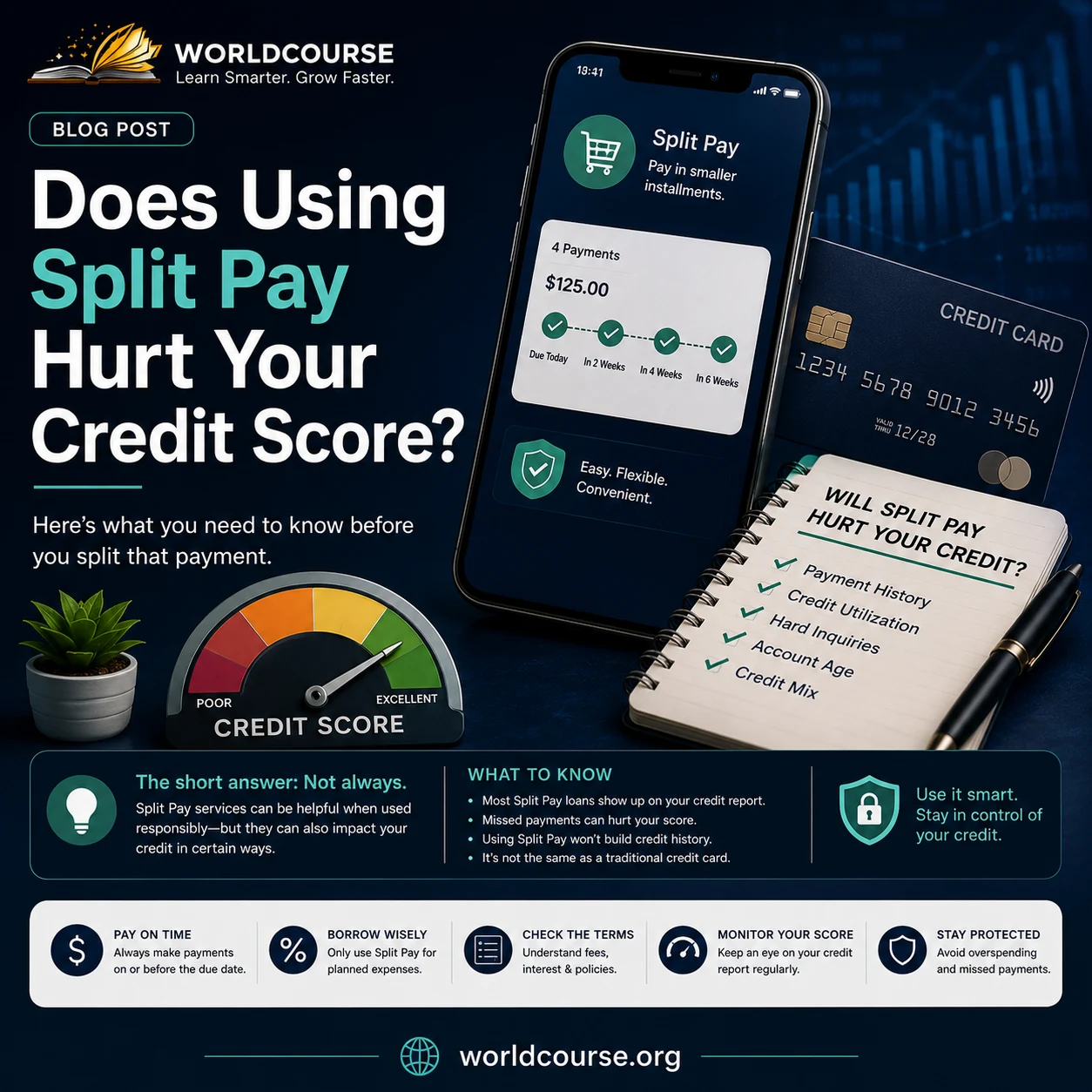
You’re checking out online, and right there next to the regular payment options is a new one: Split Pay. Break this purchase into smaller payments, no interest, just a few taps. It feels harmless enough, almost like it’s not really debt. But before you tap confirm, it’s worth actually understanding what this does to your credit, because the honest answer is a little more nuanced than a simple yes or no.
Split Pay has quietly become one of the fastest-growing checkout options out there, and it’s really just the latest name for buy now, pay later style installments. The mechanics are familiar even if the branding is new, and understanding how it actually works is the first step to using it without accidentally hurting yourself financially.
How Does Split Pay Actually Work?
Split Pay lets you divide a purchase into several smaller payments, typically spread over a few weeks, usually without any interest charged if you pay on time. It’s built into the checkout process directly, often approved almost instantly, which is a big part of why it feels so different from a traditional loan or credit card application.
Unlike a credit card, where you’re given an ongoing line of credit to use however you want, Split Pay is typically tied to that one specific purchase, with its own separate repayment schedule.
So, Does Split Pay Actually Hurt Your Credit Score?
The honest answer is: it depends, and this is exactly where a lot of the confusion comes from.
On-time payments often don’t help much, but they usually don’t hurt either. Many Split Pay providers don’t report on-time payment activity to the major credit bureaus at all, which means using it responsibly often has little to no direct impact on your credit score, positive or negative.
Missed payments can absolutely hurt your credit. This is the part that catches people off guard. If you miss a payment, many providers will report that delinquency to credit bureaus, or send the debt to collections, both of which can meaningfully damage your credit score, sometimes more severely than a similar-sized credit card late payment would.
Some providers are starting to report differently. As Split Pay and similar services grow, some providers have begun reporting payment activity, including on-time payments, to credit bureaus. This means the answer can genuinely vary depending on which specific service you’re using, not just whether you pay on time.
Is Split Pay the Same as Buy Now Pay Later?
Functionally, yes, Split Pay is essentially a rebranded or newer iteration of the buy now, pay later model that’s existed for a while. The core mechanic, splitting a purchase into smaller installments at checkout, is the same, even if the name and specific provider terms differ slightly.
This matters because it means the general risks and considerations that apply to buy now, pay later services broadly also apply here, even if “Split Pay” feels like a fresh, different product.
The Real Risks Worth Understanding
It can make overspending feel invisible. Splitting a $200 purchase into four $50 payments doesn’t change the total cost, but it can trick your brain into treating it as a smaller decision than it actually is. This is one of the most commonly cited concerns with installment-based checkout options generally.
Multiple plans can stack up quickly. Using Split Pay across several purchases simultaneously means multiple payment schedules running at once, which can become difficult to track and easy to accidentally miss, especially if they’re spread across different providers with different due dates.
Missed payment consequences vary by provider. Late fees, credit reporting, and collections practices differ significantly between providers, so understanding your specific provider’s policy before you’re in a missed-payment situation matters more than assuming they all work the same way.
It’s still a form of debt, even if it doesn’t feel like one. Because there’s often no traditional credit check and no interest if paid on time, it’s easy to mentally categorize Split Pay as something other than debt. It functions like debt regardless of how it feels at checkout.
Split Pay vs Credit Card: Which Actually Costs More?
If you pay both on time, Split Pay is often genuinely cheaper, since many plans charge no interest at all, while carrying a credit card balance accrues interest immediately. The comparison flips significantly if you miss a payment, since credit card late fees are generally more predictable and standardized, while Split Pay late fees and credit reporting practices vary considerably by provider and can catch people off guard.
The safest approach with either option is treating them the same way: only use what you can comfortably repay on schedule, regardless of which option currently feels more “harmless.”
How to Use Split Pay Without It Working Against You
Treat it like any other debt obligation. Track due dates the same way you would for a bill, rather than mentally filing it away as a minor checkout detail.
Limit how many plans you have open at once. Multiple simultaneous Split Pay plans across different purchases significantly increases the chance of accidentally missing a payment.
Check the specific provider’s credit reporting policy. Since this varies by provider, knowing in advance whether missed payments get reported, and to which bureaus, helps you understand your actual risk before you commit.
Never use it to buy something you couldn’t otherwise afford outright. If a purchase only feels affordable because it’s split into four payments, that’s often a signal worth paying attention to, regardless of the zero-interest framing.
Building Better Habits Around Tools Like This
Split Pay itself isn’t inherently good or bad, it’s a tool, and like most financial tools, the outcome depends heavily on the habits behind how it’s used. If you’re working on strengthening those broader money habits, our Money Mindset and Financial Freedom ebook covers the practical systems that make it easier to use tools like this without letting them quietly work against you.
And if avoiding the everyday financial habits that add up unnoticed is something you’re thinking about more broadly, our related post on 10 Money Habits That Are Quietly Making You Poor in 2026 covers several other common leaks worth watching for.
Frequently Asked Questions (FAQ)
Q1: Does using Split Pay hurt your credit score?
It depends on the provider and your payment behavior. Many providers don’t report on-time payments to credit bureaus, so responsible use often has minimal impact, but missed payments can be reported and meaningfully hurt your credit score.
Q2: Is Split Pay the same as buy now pay later?
Yes, functionally Split Pay is essentially a newer name or variation of the buy now, pay later model, using the same core mechanic of splitting a purchase into smaller installments at checkout.
Q3: What happens if you miss a Split Pay payment?
Consequences vary by provider, but commonly include late fees, potential credit bureau reporting of the delinquency, and in some cases the debt being sent to collections, which can damage your credit score.
Q4: Is Split Pay cheaper than using a credit card?
If both are paid on time, Split Pay is often cheaper since many plans charge no interest, while credit cards accrue interest immediately on carried balances. This advantage disappears if a Split Pay payment is missed.
Q5: Can using Split Pay too much affect your finances even without hurting your credit score?
Yes, splitting purchases into smaller payments can make overspending feel less significant than it is, and running multiple plans simultaneously can strain your budget even if your credit score itself isn’t directly affected.
Q6: How can I use Split Pay responsibly?
Track due dates like any other bill, limit how many plans you have open simultaneously, check your specific provider’s credit reporting policy, and avoid using it for purchases you couldn’t otherwise afford outright.
Explore More on WorldCourse
- Build stronger money habits with Money Mindset and Financial Freedom
- Related read: 10 Money Habits That Are Quietly Making You Poor in 2026
- Related read: What Is Coast FIRE? How to Know If You’ve Reached It
- Browse the full ebooks and guides library
- Read more on our blog
- Have questions? Contact our support team