
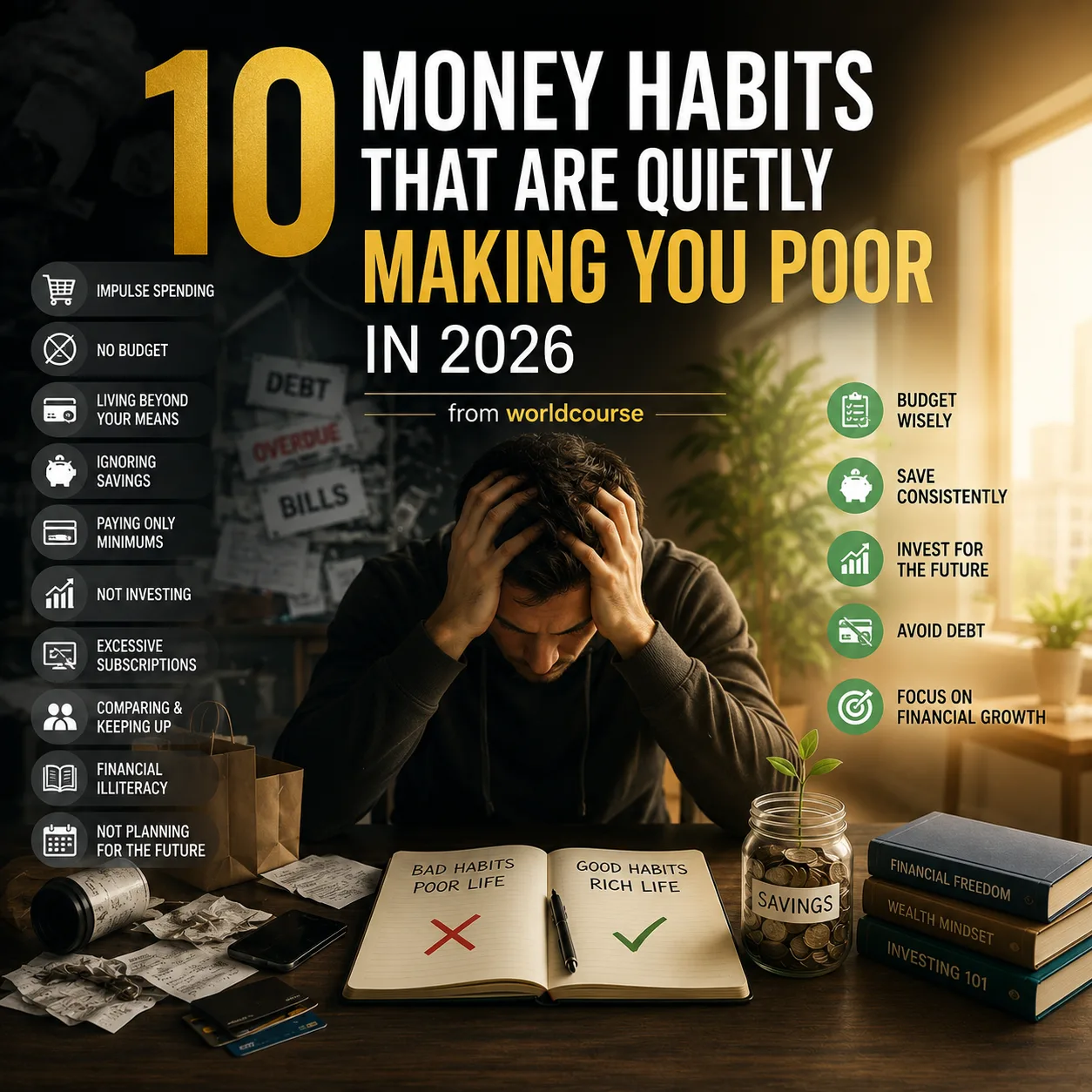
You check your bank balance, sigh, and tell yourself you’ll “do better next month.” Sound familiar? Here’s the uncomfortable truth: it’s rarely one big financial mistake that keeps people broke. It’s usually a handful of small, quiet money habits that feel harmless in the moment but slowly drain your wallet over months and years.
In 2026, with inflation still squeezing everyday budgets across the US and UK, these habits matter more than ever. The good news? Once you spot them, they’re fixable — and fixing even two or three of them can free up hundreds of dollars (or pounds) a month without you having to earn a single extra cent.
Let’s go through the ten habits that are quietly keeping you poor, and exactly what to do instead.
1. Paying for Subscriptions You Forgot You Had
The average person in the US now spends over $200 a month on subscriptions — streaming, apps, gym memberships, software trials that auto-renewed. Most people underestimate this number by half because it’s spread across dozens of small charges instead of one big bill.
Fix it: Once a month, go through your bank statement line by line. Cancel anything you haven’t used in the last 30 days. You’ll almost always find at least one “ghost subscription” quietly draining your account.
2. Only Making Minimum Payments on Credit Cards
This is one of the most damaging money habits because it feels responsible — you’re paying something, after all. But minimum payments are designed by credit card companies to keep you in debt as long as possible, with interest eating up most of what you pay.
Fix it: Even an extra $20–$50 a month above the minimum can cut years off your repayment timeline and save you hundreds in interest.
3. Treating “Buy Now, Pay Later” as Free Money
BNPL services like Klarna, Afterpay, and Clearpay have made overspending feel invisible. Splitting a purchase into four payments doesn’t change the total cost — it just hides it from your brain.
Fix it: Before using BNPL, ask yourself: “Would I still buy this if I had to pay the full amount today?” If the answer is no, skip it.
4. Not Having Any Emergency Fund
Without a financial cushion, every unexpected expense — a car repair, a medical bill, a job loss — turns into new debt. This is one of the biggest reasons people stay stuck in a cycle of borrowing.
Fix it: Start small. Even $500–$1,000 set aside can prevent most minor emergencies from becoming credit card debt.
5. Letting Lifestyle Creep Eat Every Raise
Get a pay rise, upgrade your car. Get a bonus, book a bigger holiday. This pattern — known as lifestyle creep — means your spending rises exactly as fast as your income, so you never actually get ahead.
Fix it: Whenever your income increases, commit to saving or investing at least half of the extra amount before you let your lifestyle catch up.
6. Grocery Shopping Without Any Plan
Walking into a supermarket hungry and without a list is one of the fastest ways to overspend. Impulse purchases at checkout and “just in case” items add up faster than most people realize.
Fix it: Plan meals for the week, shop with a list, and avoid grocery shopping on an empty stomach. This single habit alone can save many households a significant amount every month.
7. Ignoring Your Pension or Retirement Contributions
Whether it’s a 401(k) in the US or a workplace pension in the UK, skipping or minimizing contributions — especially when there’s an employer match — is essentially turning down free money.
Fix it: At minimum, contribute enough to get your full employer match. It’s one of the highest guaranteed returns you’ll ever get on your money.
8. Using Savings Accounts With Almost Zero Interest
Many people leave thousands sitting in a standard savings account earning next to nothing, while high-yield savings accounts or easy-access ISAs offer significantly better returns for the same level of safety.
Fix it: Compare rates and move your savings to a high-yield account. It takes 15 minutes and costs nothing.
9. Avoiding Money Conversations Out of Fear or Shame
Many people avoid checking their balance, opening bills, or talking about debt because it feels stressful. But avoidance doesn’t make financial problems disappear — it just lets them grow quietly in the background.
Fix it: Set a weekly 10-minute “money check-in” with yourself. No judgment, just awareness. Clarity is the first step toward control.
10. Not Investing Because It “Feels Risky”
Keeping all your money in cash feels safe, but inflation quietly erodes its value every year. Many people avoid investing simply because they don’t understand it, not because it’s actually too risky for their situation.
Fix it: Start learning the basics of investing and money mindset before jumping in. Small, consistent contributions to low-cost index funds over time have historically outperformed simply holding cash.
Why These Habits Matter More in 2026
With the cost of living still elevated across both the US and UK, small financial leaks add up faster than they did a few years ago. The households that are getting ahead in 2026 aren’t necessarily earning more — they’re simply plugging these quiet leaks and redirecting that money toward savings, debt payoff, and investing.
None of these fixes require a finance degree. They require awareness, a little discipline, and the right systems in place.
Building a Long-Term Money Mindset
Fixing individual habits helps in the short term, but real financial freedom comes from shifting how you think about money altogether — building systems, budgeting with intention, and understanding where every dollar or pound is going. If you want a complete, beginner-friendly roadmap for building healthier financial habits from the ground up, our Money Mindset and Financial Freedom ebook walks you through exactly that.
Frequently Asked Questions (FAQ)
Q1: What are the most common money habits that keep people poor?
The most common habits include unused subscriptions, minimum credit card payments, no emergency fund, lifestyle creep, and avoiding investing out of fear. These small, repeated behaviors quietly drain finances over time.
Q2: How can I stop lifestyle creep when I get a raise?
Commit to saving or investing at least half of any raise or bonus before adjusting your spending. This keeps your lifestyle growing slower than your income.
Q3: Is it better to pay off debt or build an emergency fund first?
Most financial experts recommend building a small starter emergency fund (around $500–$1,000) first, then focusing on aggressively paying down high-interest debt.
Q4: Why do subscriptions cost more than people realize?
Because charges are spread across many small monthly payments instead of one large bill, making it easy to lose track of the total amount being spent each month.
Q5: Is investing really necessary if I already save money regularly?
Yes. Cash sitting in a low-interest account loses value over time due to inflation, while long-term investing has historically helped money grow faster than inflation.
Q6: What’s the easiest first step to improving my money habits?
Start with a simple weekly money check-in — review your spending, subscriptions, and balances for just 10 minutes. Awareness is the foundation every other habit builds on.
Explore More on WorldCourse
- Build a stronger financial foundation with our Money Mindset and Financial Freedom ebook
- Browse more ebooks and guides on WorldCourse
- Read more practical money and business tips on our blog
- Have questions? Contact our support team