
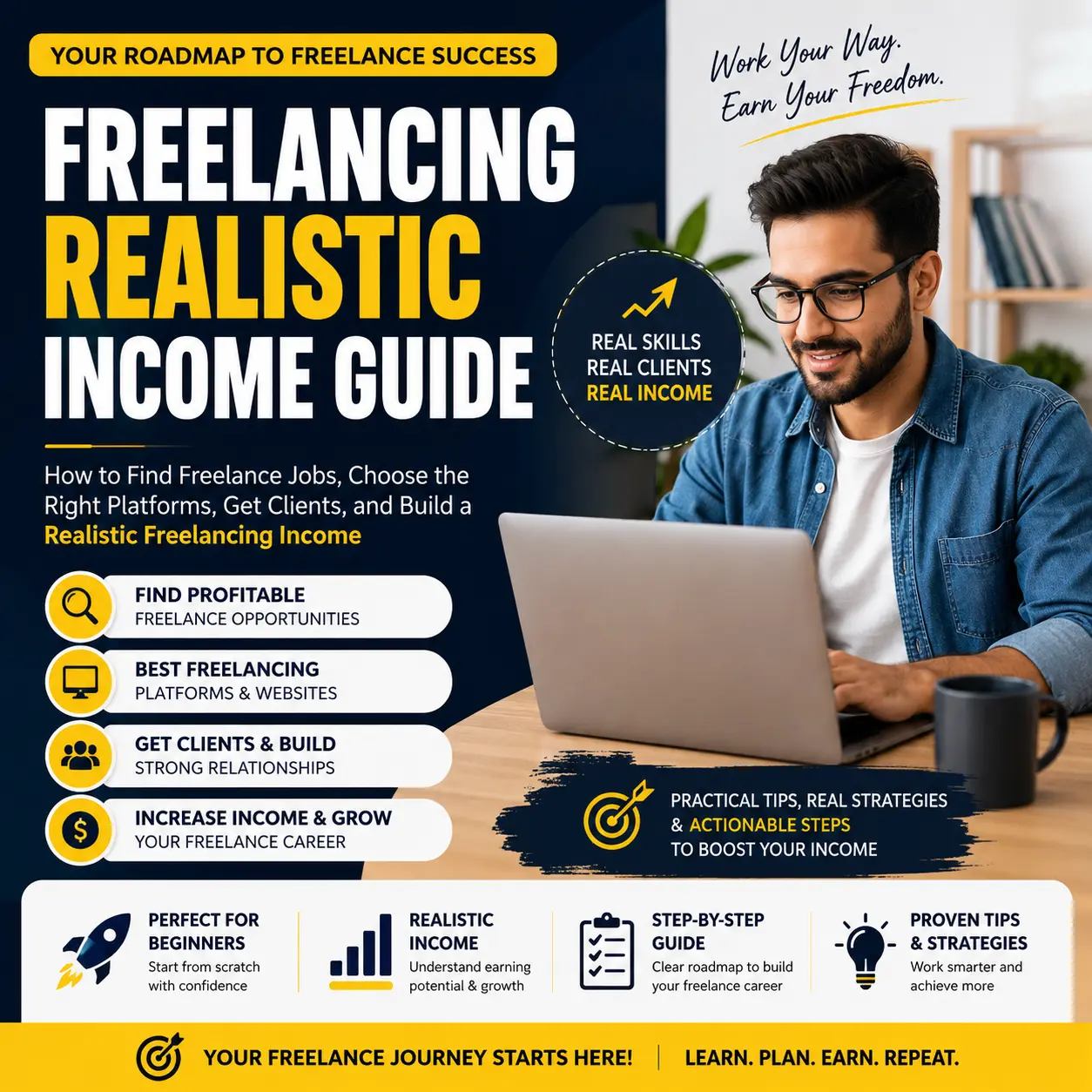
Search “freelance opportunities” and you’ll find two extremes: people claiming they quit their job and replaced their income in a month, and people warning that freelancing barely pays anything at all. Neither extreme is particularly useful, and neither reflects what actually happens for most people who start freelancing seriously. The Freelancing Realistic Income Guide exists to fill that gap, showing you what real freelance opportunities look like, how income actually builds over time, and what it genuinely takes to get there.
This isn’t a guide promising a specific dollar figure by a specific date. It’s a practical, honest breakdown of finding freelance opportunities, choosing the right platforms, landing clients, and understanding realistic income timelines, without the inflated promises most freelancing content leans on.
Why Freelance Opportunities Get Misrepresented So Often
The Two Extremes of Freelancing Content
Most freelancing content falls into overnight-success stories or discouraging horror stories, both designed more for engagement than accuracy. This chapter breaks down why freelance opportunities get misrepresented so consistently, and what a more realistic picture actually looks like based on how income typically builds for people who stick with it.
Setting Expectations That Won’t Leave You Discouraged
Realistic expectations aren’t about lowering your ambitions, they’re about understanding the actual timeline so you don’t quit right before things start working. This section covers what a genuinely typical first three to six months of freelancing looks like, income-wise, for someone starting from zero.
Finding Freelance Jobs for Beginners Online
Where Freelance Jobs for Beginners Online Actually Exist
This chapter covers where freelance jobs for beginners online genuinely show up, beyond just the most obvious platforms, including niche job boards, direct outreach, and referral-based opportunities that don’t require competing against thousands of other bidders.
Freelance Writing Jobs as a Realistic Starting Point
Freelance writing jobs are often one of the more accessible entry points into freelancing, since the barrier to getting started is lower than many other skills. This section covers how to realistically approach freelance writing jobs, from finding your first assignments to pricing your work appropriately as you build experience.
Choosing the Right Freelancing Platforms
Comparing Freelancing Platforms Honestly
Not all freelancing platforms are built the same, and this chapter compares the major ones honestly, covering fee structures, competition levels, and which platforms actually suit beginners versus more established freelancers.
Upwork Jobs: What to Realistically Expect
Upwork jobs are often where many people start, and this section covers what to actually expect there: competitive bidding, the importance of your profile and early reviews, and realistic strategies for landing your first few contracts without underpricing yourself into an unsustainable rate.
Freelance Websites Beyond the Big Platforms
Beyond the major freelancing platforms, this chapter covers other freelance websites and channels worth exploring, including specialized platforms for specific skills and communities where clients actively look for freelancers directly.
Freelancing Tips That Actually Move the Needle
This chapter covers freelancing tips that genuinely affect your income and client relationships, not generic advice like “network more.” Specific tips include how to write proposals that actually get read, how to price your services as you gain experience, and how to build a portfolio that demonstrates real value even before you have client testimonials.
Building Toward Realistic Freelancing Income
What Realistic Freelancing Income Actually Looks Like Over Time
This chapter walks through realistic income progression, from your first small projects through building a sustainable client base, based on common patterns rather than best-case outlier stories.
Turning Freelancing Into a Real Side Business
For many people, freelancing starts as exploring how to start a side business alongside existing work, rather than an immediate full-time replacement. This section covers how to build freelancing sustainably around existing commitments before deciding whether to transition further.
Who Is This Ebook For?
The Freelancing Realistic Income Guide is built for:
- Anyone exploring freelance opportunities for the first time and wanting honest expectations
- Beginners searching for freelance jobs for beginners online without knowing where to actually start
- Writers considering freelance writing jobs as an entry point into freelancing
- Anyone researching how to start a side business through freelancing specifically
Why This Guide Is Different
Most freelancing content sells either unrealistic dreams or unnecessary fear. The Freelancing Realistic Income Guide is different because it treats you as capable of handling an honest picture, real timelines, real platform tradeoffs, and real income patterns, rather than a simplified pitch in either direction.
Start With Realistic Expectations, Not Hype
Freelance opportunities are genuinely out there, but building real income from them takes an honest understanding of the process, not overnight promises. With the Freelancing Realistic Income Guide, you get a clear, practical roadmap for finding freelance jobs, choosing the right platforms, and building income that actually lasts. Download it today and start freelancing with realistic expectations instead of a mismatched timeline.
Frequently Asked Questions (FAQ)
Q1: What are realistic freelance opportunities for complete beginners?
Realistic freelance opportunities for beginners often include freelance writing jobs, smaller platform-based gigs, and niche job boards, rather than immediately competing for high-value contracts against experienced freelancers.
Q2: How long does it take to build a realistic freelancing income?
Timelines vary, but a genuinely typical pattern involves several months of smaller projects and client-building before income becomes consistent, rather than replacing a full income within the first few weeks.
Q3: Are Upwork jobs a good starting point for new freelancers?
Yes, with realistic expectations. Upwork jobs involve competitive bidding, so early success often depends on a strong profile and accepting slightly lower rates initially to build reviews and credibility.
Q4: What freelancing platforms are best for beginners?
The best freelancing platforms for beginners depend on your specific skill set, though general platforms combined with niche, skill-specific freelance websites often provide a more balanced mix of opportunity and lower competition.
Q5: Can freelancing realistically become a side business alongside a full-time job?
Yes, many freelancers start by exploring how to start a side business through freelancing part-time, building income and experience gradually before considering a full transition.
Q6: How do I access the ebook after purchasing it?
After purchase, you’ll get instant digital access to download the ebook, readable on any device including your phone, tablet, or computer.
Explore More on WorldCourse
- Building a remote career? See The Remote Career Blueprint
- Build stronger money habits with Money Mindset and Financial Freedom
- Explore other income streams in the Passive Income Blueprint
- Browse more ebooks and guides on WorldCourse
- Have questions about this ebook? Contact our support team



Reviews
There are no reviews yet.