
Bitcoin ATMs are everywhere now, gas stations, convenience stores, shopping mall kiosks, promising a fast way to turn cash into crypto. But “fast” and “safe” aren’t the same thing, and before you feed cash into one of these machines, it’s worth understanding exactly what you’re paying for and what to check first.
How a Bitcoin ATM Actually Works
A bitcoin atm lets you insert cash and receive Bitcoin (or occasionally other cryptocurrencies) directly into a wallet, either one you already have or a paper wallet the machine prints for you. Some machines also let you sell Bitcoin back for cash. The transaction happens almost instantly, which is exactly why the convenience comes at a real cost.
The Real Cost: Bitcoin ATM Fees Are Much Higher Than You’d Expect
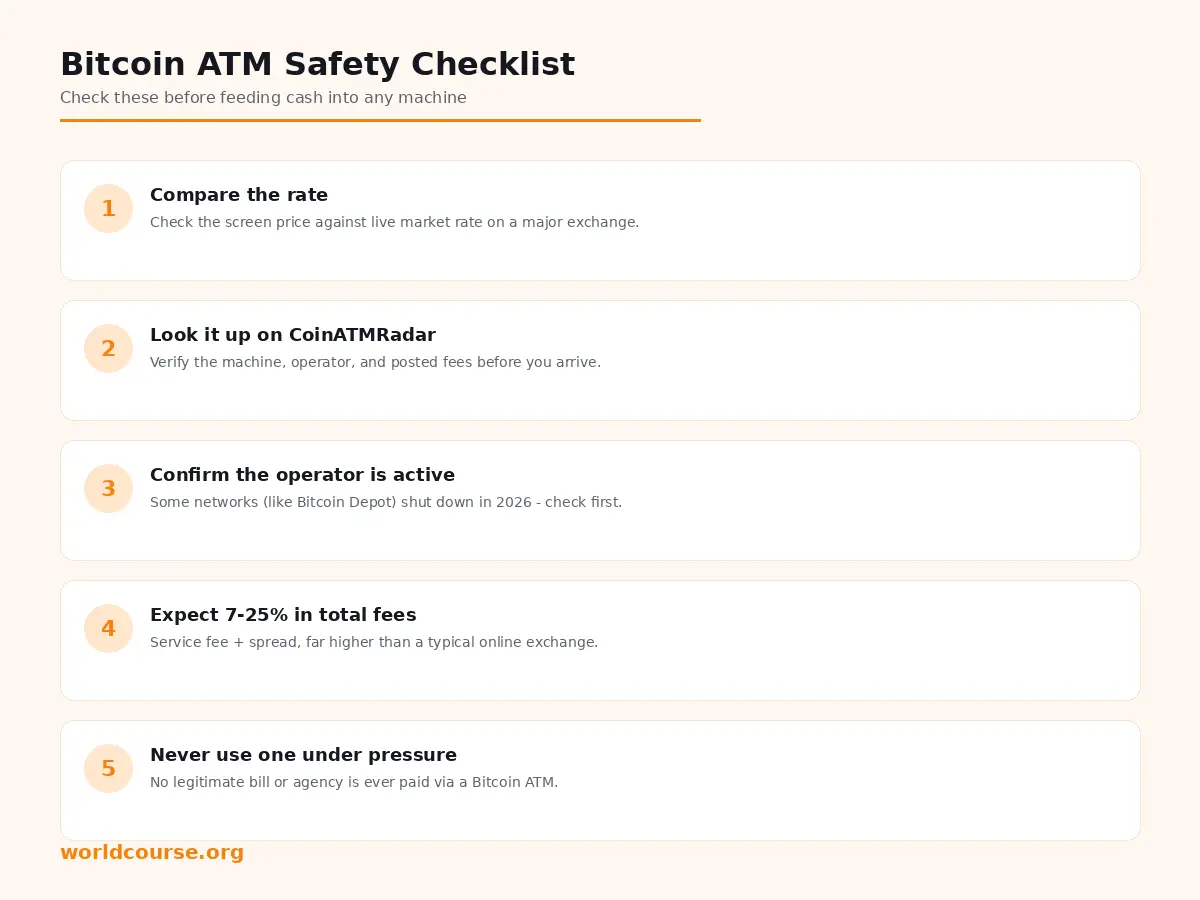
This is the part that catches most first-time users off guard. Online exchanges typically charge well under 2% per transaction. A bitcoin atm, by comparison, commonly charges somewhere between 7% and 25% of your transaction, once you account for both the visible service fee and the built-in spread between the machine’s Bitcoin price and the actual market rate.
That means on a $100 transaction, you might walk away with somewhere between $75 and $93 in actual Bitcoin value, depending on the specific machine and operator. The fee isn’t hidden exactly, it’s usually displayed on screen before you confirm, but it’s easy to miss if you’re not specifically looking for it.
Why Are the Fees So High?
It’s not purely profit margin. Operating a bitcoin atm involves real costs: armored cash transport, physical machine maintenance, retail placement fees to the store hosting it, and increasingly strict compliance requirements around identity verification and anti-money-laundering checks. None of that makes the fee feel smaller, but it explains why it’s structurally higher than a purely digital exchange.
How to Check If a Bitcoin ATM Is Legitimate
Compare the displayed rate to the live market price. Before confirming any transaction, check what Bitcoin is actually trading at on a major exchange, then compare that to the rate shown on the machine screen. A large gap tells you exactly how much spread you’re paying.
Use a directory tool like coinatmradar to check the machine first. Coinatmradar lets you look up specific machines by location, operator, and posted fees before you ever walk up to one, so you’re not guessing when you arrive.
Confirm the operator is actually still active. The Bitcoin ATM industry has seen real consolidation, Bitcoin Depot, once one of the largest networks in the country, filed for bankruptcy and deactivated its machines in 2026. A machine sitting unused in a store doesn’t necessarily mean it’s currently operational, worth confirming before you rely on one.
Know which major operators are currently running machines in your area. Names like Bitstop, CoinHub, RockItCoin, and Coinme currently operate significant numbers of machines across the US, and checking reviews or recent activity for the specific operator near you is a reasonable first step.
Is It Ever Worth Using One, Given the Fees?
Sometimes, yes. If you need Bitcoin quickly, don’t have easy access to a bank-linked exchange account, or specifically need a cash-to-crypto transaction for a reason an online exchange can’t accommodate, the convenience premium may genuinely be worth it to you. The key is knowing the real cost going in, rather than being surprised by it after the fact.
For most people simply looking to buy or sell Bitcoin without an urgent cash-based reason, an online exchange will almost always be meaningfully cheaper.
Consumer Protections Are Improving, But Vary by State
A growing number of US states have introduced specific consumer protection rules for bitcoin atm operators, including fee disclosure requirements, transaction limits for new users, and in some cases fraud-refund windows. These protections vary significantly by state and continue to evolve, so it’s worth checking your specific state’s current rules rather than assuming blanket protection nationwide.
Red Flags to Watch For
Anyone pressuring you to use a bitcoin atm urgently, particularly as part of a phone call, text message, or online interaction claiming you owe money or need to “verify” an account, is very likely running a scam. Legitimate bills and government agencies do not get paid through Bitcoin ATMs. If someone is directing you specifically to one of these machines under pressure, that alone is a major warning sign, regardless of how convincing the story sounds.
Protecting the Bitcoin You Buy
Getting Bitcoin out of an ATM safely is only half the picture, what you do with it afterward matters just as much. If you’re storing any meaningful amount, our Cold Wallet Security Guide covers how to move it into proper offline storage instead of leaving it sitting on an exchange or in a wallet the ATM generated for you. And if you’re generally cautious about crypto-related scams, our related post on how to spot an AI scam and our Scam Protection Guide cover the broader warning signs worth knowing.
Frequently Asked Questions (FAQ)
Q1: Are Bitcoin ATMs safe to use?
They’re generally legitimate machines, but “safe” mainly comes down to understanding the high fees involved and confirming the specific machine and operator are active and reputable before using one.
Q2: How much does a Bitcoin ATM actually charge in fees?
Total costs, including the service fee and price spread, commonly range from 7% to 25% of the transaction, significantly higher than the under-2% fees typical of online exchanges.
Q3: How can I check if a Bitcoin ATM is legitimate before using it?
Compare the machine’s displayed rate to the live market price, use a directory tool like coinatmradar to research the specific machine and operator, and confirm the operator is currently active.
Q4: Is Bitcoin Depot still operating machines?
No, Bitcoin Depot filed for bankruptcy and deactivated its machines in 2026, which is a useful reminder to confirm any specific operator’s current status before relying on a particular machine.
Q5: Why are Bitcoin ATM fees so much higher than online exchanges?
Costs like armored cash transport, machine maintenance, retail placement fees, and compliance requirements around identity verification make operating physical machines structurally more expensive than a purely digital exchange.
Q6: Can someone legitimately ask me to pay them using a Bitcoin ATM?
No, this is a common scam pattern. Legitimate bills, taxes, and government agencies never require payment through a Bitcoin ATM, and pressure to use one urgently is a major red flag.
Explore More on WorldCourse
- Protect what you buy with the Cold Wallet Security Guide
- Related read: How to Spot an AI Scam Before It Costs You Money
- Related read: Don’t Get Burned: Scam Protection Guide
- Browse the full ebooks and guides library
- Have questions? Contact our support team