
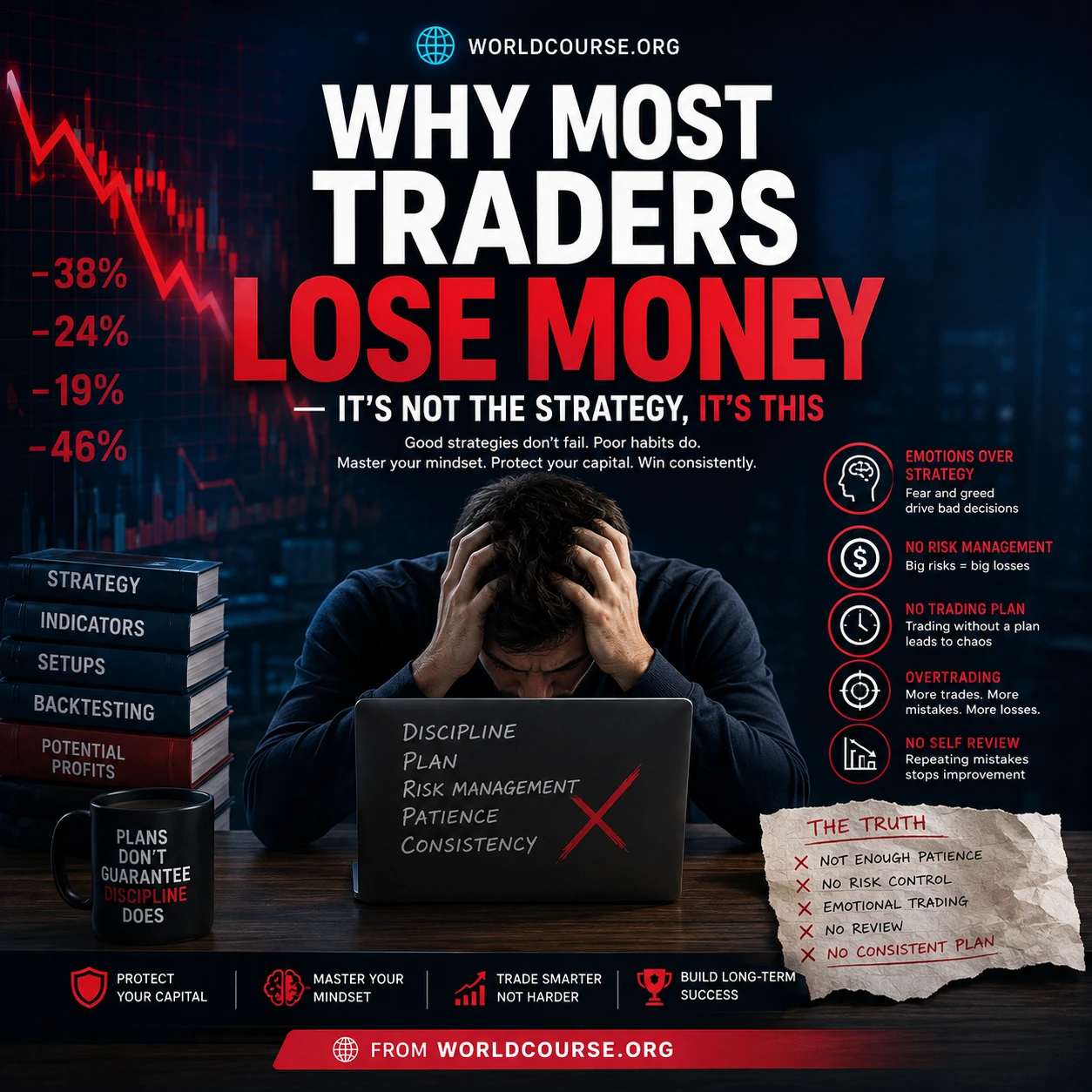
If you’ve spent any time trading, you’ve probably gone through the same cycle: try a strategy, lose money, blame the strategy, switch to a new one, repeat. It feels logical — surely the right strategy is out there somewhere. But here’s what most traders eventually realize, usually the hard way: the strategy was rarely the actual problem.
Ask experienced traders across the US and UK what separates the ones who survive from the ones who blow up their accounts, and almost none of them will point to a specific strategy. They’ll point to something far less exciting, but far more important: risk management.
The Real Reason Most Traders Lose Money
Here’s an uncomfortable truth — you can take a genuinely good trading strategy, with a real statistical edge, and still lose money with it. How? By risking too much on individual trades, ignoring position sizing, or abandoning your stop-loss the moment a trade starts moving against you.
Meanwhile, a mediocre strategy paired with disciplined risk management can survive losing streaks that would wipe out an undisciplined trader using a “better” system. This is the part most beginners get backwards. They obsess over finding the perfect entry signal while treating risk management as an afterthought, when it’s actually the deciding factor in whether they’re still trading a year from now.
Why This Mistake Is So Common
It’s not that traders don’t know risk management exists. Most have heard of stop-losses and position sizing. The problem is deeper than knowledge — it’s psychological.
Overconfidence After a Winning Streak
A few wins in a row and it’s easy to start believing you’ve “figured it out.” Position sizes creep up, stop-losses get looser, and risk discipline quietly erodes right when a trader feels most confident — which is often exactly when a larger loss is waiting.
Fear During a Losing Streak
On the flip side, after a string of losses, many traders make the opposite mistake — they either freeze up and miss good setups, or they overcorrect by taking oversized “revenge trades” trying to win back losses quickly. Both reactions come from letting emotion override a pre-defined risk plan.
No Actual Written Risk Plan
Ask most traders what their exact risk rules are, and you’ll often get a vague answer like “I try not to risk too much.” Vague rules don’t hold up under pressure. Specific, written risk rules do.
What Disciplined Risk Management Actually Looks Like
Risk management isn’t complicated in theory — it’s difficult in practice because it requires consistency, especially when emotions are running high. A few core principles tend to separate traders who last from those who don’t:
Defining risk before entering, not after. Deciding your stop-loss and position size before you enter a trade removes emotional decision-making from the equation once you’re already in the position.
Risking a small, consistent percentage per trade. Many experienced traders risk only a small fraction of their account on any single trade, so no individual loss can meaningfully damage their overall capital.
Respecting the stop-loss, every time. A stop-loss only works if you actually honor it. Moving it further away “just this once” is one of the most common ways disciplined plans fall apart.
Tracking risk across open positions, not just individual trades. Multiple correlated positions can create far more overall risk than they appear to individually, especially in volatile markets.
Why This Matters More in 2026
With markets remaining volatile across both the US and UK, and retail trading more accessible than ever through mobile apps, more people are trading with less structure than in previous years. The traders who consistently survive aren’t necessarily the ones with the most sophisticated strategies — they’re the ones who treat capital protection as seriously as they treat finding trade opportunities.
Building a System, Not Just a Strategy
The shift that actually changes outcomes isn’t finding a better entry signal. It’s building a complete system where risk management is treated as the foundation, not an add-on. If you want a structured, practical framework for building exactly that kind of discipline into your trading, our Modern Traders Risk Playbook walks you through position sizing, stop-loss discipline, and the psychology behind consistent risk-taking.
Frequently Asked Questions (FAQ)
Q1: Why do most traders lose money even with a good strategy?
Most losses come from poor risk management rather than the strategy itself — oversized positions, ignored stop-losses, and emotional decision-making can turn even a statistically sound strategy into a losing one.
Q2: What is the biggest risk management mistake new traders make?
Not having specific, written risk rules defined before entering a trade. Vague intentions like “I won’t risk too much” tend to break down under the pressure of an actual losing trade.
Q3: How much should a trader risk on a single trade?
Many experienced traders limit risk to a small, consistent percentage of their total account per trade, though the exact amount depends on individual risk tolerance and trading style.
Q4: Why do traders abandon their stop-loss during a trade?
This usually happens due to emotional attachment to a position or overconfidence that the market will reverse, both of which risk management discipline is specifically designed to prevent.
Q5: Is risk management more important than finding a good strategy?
Both matter, but risk management often determines whether a trader survives long enough to benefit from a good strategy in the first place, especially through inevitable losing streaks.
Q6: Can good risk management work with any trading strategy?
Yes, risk management principles like position sizing and stop-loss discipline apply broadly across strategies and markets, rather than being tied to one specific trading approach.
Explore More on WorldCourse
- Build a complete risk management system with our Modern Traders Risk Playbook
- Browse more ebooks and guides on WorldCourse
- Read more practical tips on our blog
- Have questions? Contact our support team